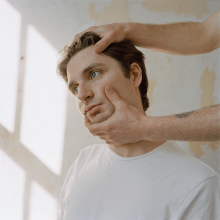
Elinor Carucci is an Israeli-American photographer born in Jerusalem in 1971.
A 2010 Article by Susan Kismaric for The Telegraph, on Elinor Carucci’s Closer:
“Elinor Carucci was twenty-two years old when she made the earliest photographs in this book. The first is a very close view of her face next to her mother’s, revealing only one eye of each. The picture is constructed so that the visible plane of each face becomes a facet of a single face, creating a kind of ersatz Cubist portrait. The other early picture is one in which Carucci’s scrubbed fresh face is cradled by her mother’s nail-polished hand, while the older woman’s other hand applies lipstick (the same color as her fingernails) to her daughter’s lips, suggesting the face painting of a tribal, coming-of-age ritual. This melding of familial flesh runs through the pages of Closer and is one of its many surprises, as is the willingness of everyone depicted to literally bare themselves for the camera.
The first printing of Closer in 2002 sold out—no small achievement for a book of photographs by a then unknown, unproven photographer. While the pictures describe the vulnerability of our aging, corporeal selves, they also describe the sensual and sexual pleasures to be had in life, seemingly right next to us, just for the asking—kissing, stroking, touching, embracing, hugging, eating, bathing, enjoying sex. We do, after all, see three generations of the same family in the pages of the book. The themes are many, ranging from female identity to family to mortality, and it is the beauty of the work that we are drawn back to it to discover more and more of them.
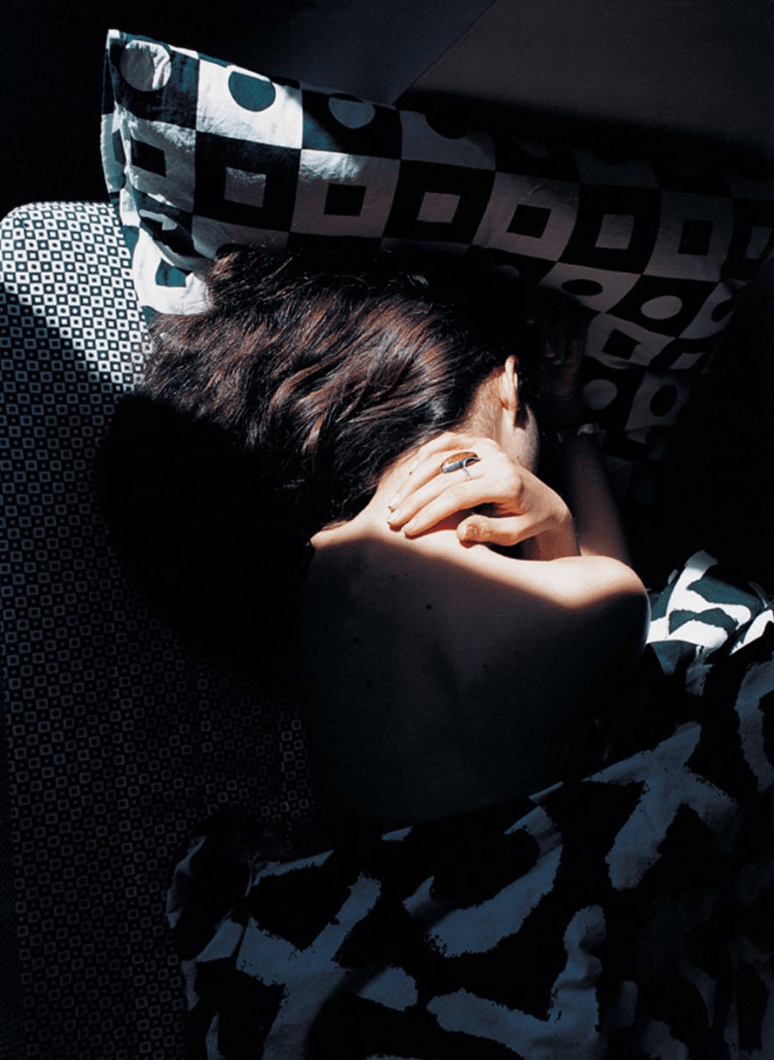
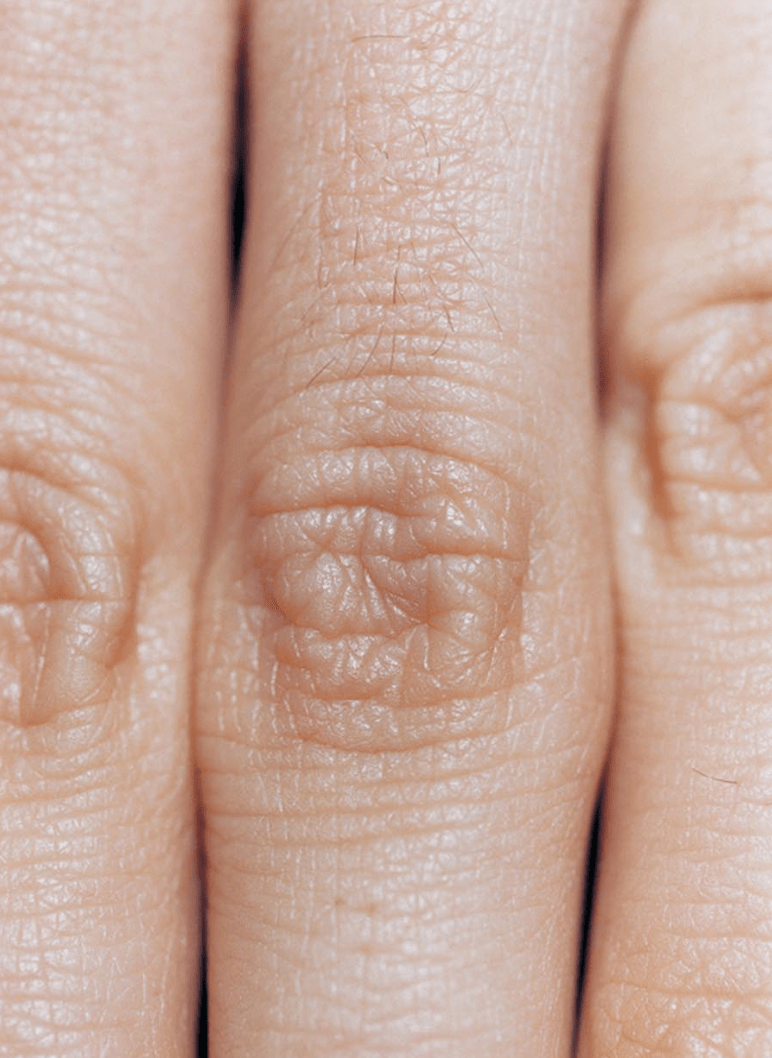
The vulnerability of flesh is a central concern, noted in the visible age differences between the bodies of Carucci’s husband Eran and her father; in the exposed skin, pale and careworn, of her parents and grandparents; and in the genetically shared but contrasting flesh of Carucci’s own body paired with her mother’s. Other pictures are less overarching in what they describe, but poignant details insist on the vulnerability of our bodies—the impressions made by nightclothes on flesh that has been sunk in sleep, the barbed stitches holding a cut together on the tip of a finger, the indentations left by fingernails that have dug into the palm of a hand, and the mark left by a zipper on a stomach, reading like a faint scar from a serious operation.
The formation of female identity is another of the book’s themes. We see it in the Snow-White–red lips of Carucci’s mother, the body-binding panty hose, the hooks of a bra across her mother’s back, the bleach cream erasing the dark hair of Carucci’s stomach, a shaved armpit, the plucking (ouch!) of a nipple hair, and a woman’s upper eyelashes being bent by an eyelash curler branded with the name “Revlon”—branding being a fair description of the activities woman engage in to be considered adequately female.
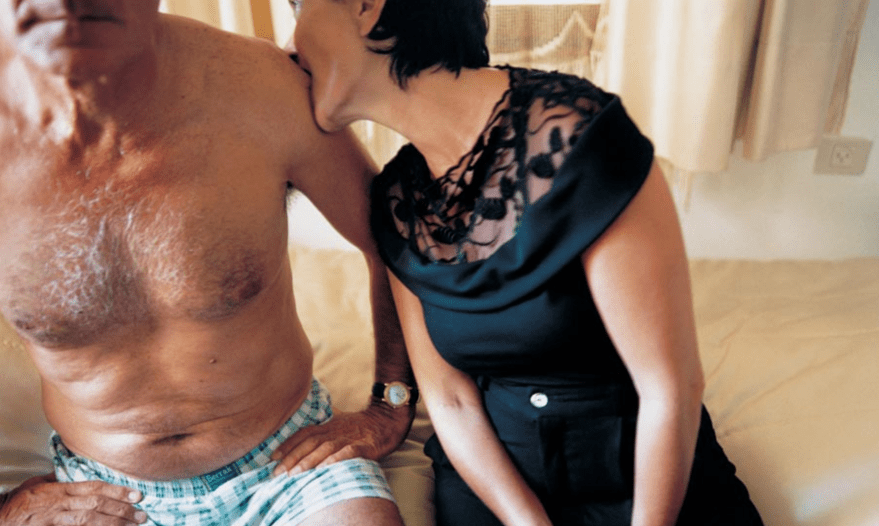
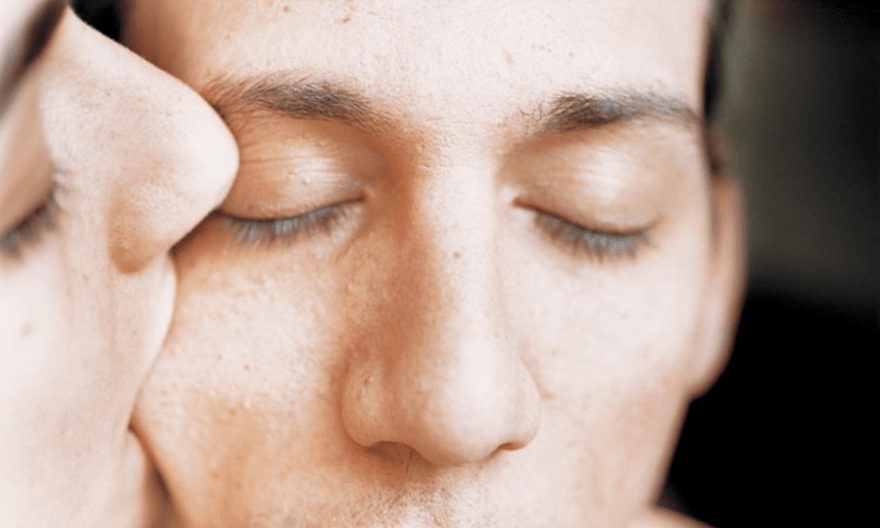
It may have been Carucci’s youth that gave her the license and nerve to make such audacious photographs. The freedom and empathy of Helen Levitt’s pictures of children playing on the streets of New York in the late 1930s and early 1940s must have had something to do with Levitt’s closeness to her own childhood (she was around twenty-five when the pictures were made). Like Levitt, Carucci struck out early and found success by following her unfettered instincts. Carucci’s pictures skip over Levitt’s poetic distance and trespass into her subjects’ space with a voracious, childlike appetite, one that examines everyone within reach. In these pictures, she’s like a baby discovering the world by touching, tasting, licking, eating, and above all, looking with wide-open eyes. Her investigation even records documentation of near-cannibalism. In one picture her mother bites the shoulder of her husband; in another, Carucci bites her husband’s cheek. Carucci’s photographs are graphic. That is, her subjects are drawn as simple shapes within the frame, and she has arranged them just enough to tell us what she wants us to know. She uses few colors, a lot of flesh color and red, and the golden light of the sun. This graphic simplicity provides immediacy for the viewer and charges the work with a sense of the physical world.
The only other photographer who has looked at the human body with such candor is the late John Coplans, who published a dozen books of black-and-white photographs scrutinizing his own aging body. Coplans never included his face in his pictures, and he arranged everything from his toes to his shoulders into abstractions that often read like totems or bas-relief. Carucci, on the other hand, identifies her characters and assigns faces to their bodies, insisting that these are real people who are part of an ongoing narrative—people we might recognize and empathize with.”
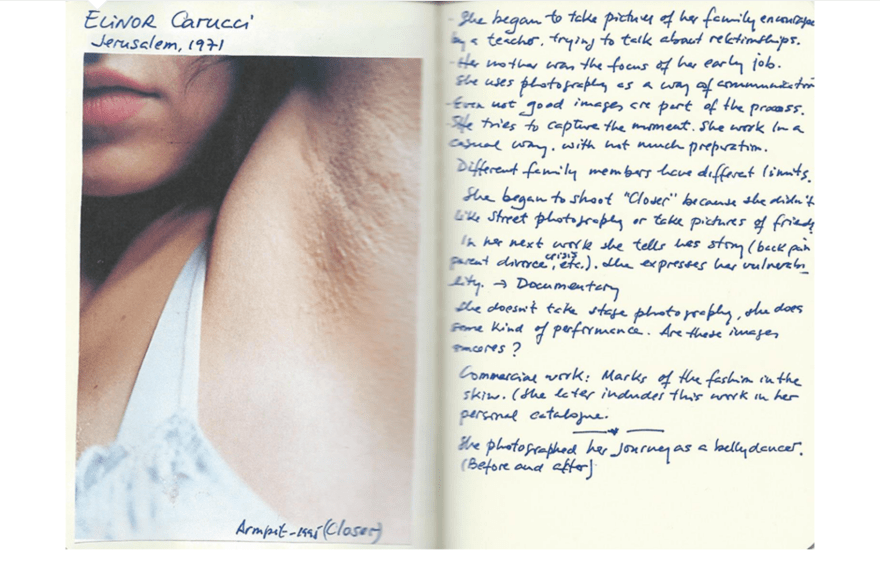
Something that I found striking from the article by Susan Kismaric, was ‘she’s like a baby discovering the world by touching, tasting, licking, eating, and above all, looking with wide-open eyes.’ This really transends through the work, it feels as though she is using her touch to get to know and understand her subjects, sometimes just the though of the touch is enough to make the image intimate. Differing from the work of Nelli Palomaki her use of physical contact is much more personal, not just hands and arms, but bodies, mouths, faces and fingers. The work has a slightly more sexual nature, the images are shot closer and are so intimate that the subjects seem so much more naked, physically and emotionally. The atmosphere in the work differs greatly from that of Palomaki, as it feels more loving, less cold and aggressive. I feel that this work is beautiful, and shows a family and relationship dynamic through physical contact in a much more intimate way, I feel that it does not talk to my own work, or my own experiences as much as previous work I have seen.


 phoebebowdige.photo.blog