Family portraits taken yearly in my home town of Lewes in East Sussex, taken by Edward Reeves, a family friend and photographer. These images were taken from 2007 – 2012, and show our happy smiling faces. From 2009 – 2010 one of my brothers friends lived with us after his own family did not work out, so Alex was like another older brother to me.
These photographs are my starting point of my exploration of the dynamic and effects of having two/three older brothers. When I got out the photographs this week (December 2018) my oldest brother Rowan walked past, laughed, and said how funny it was that we all looked like this in the portraits, when so much was happening behind the scenes. It was interesting that he said this, as I hadn’t yet spoken to him about the project, but he could also see what I could see.
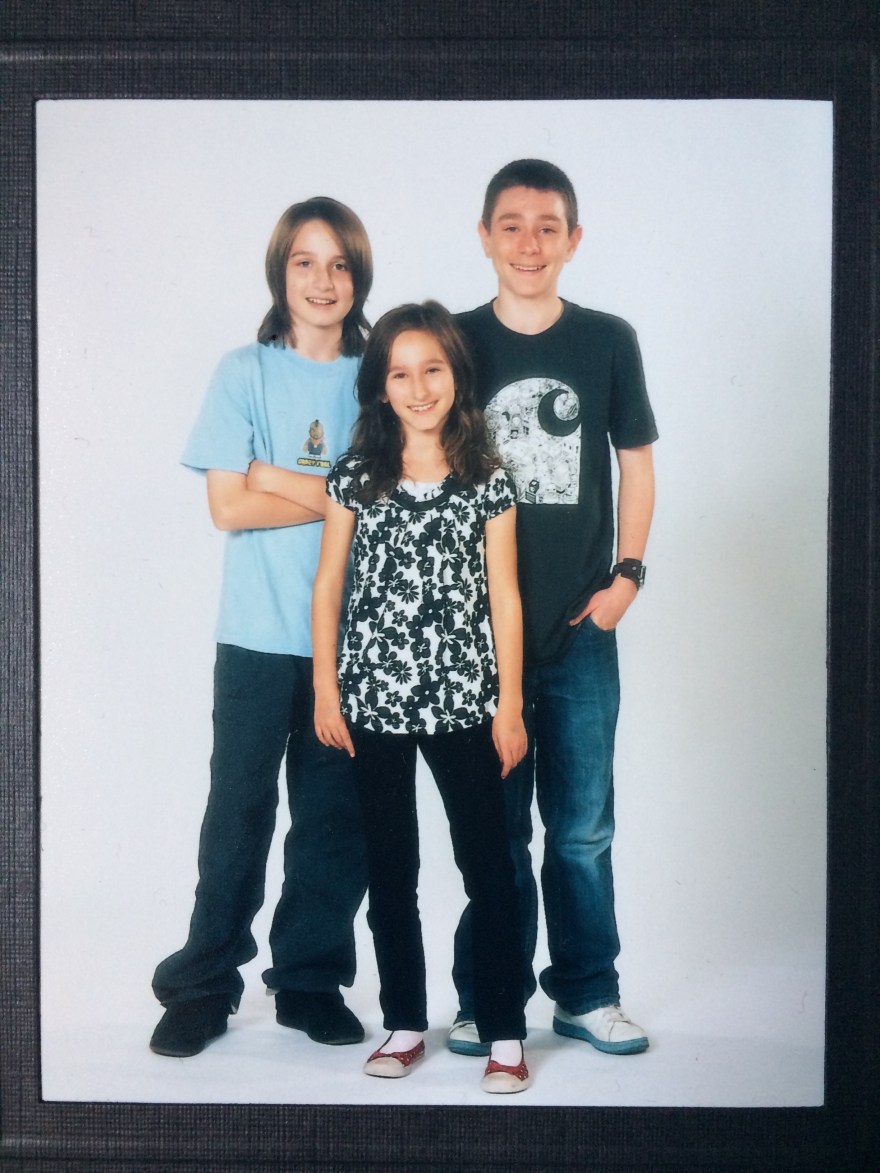
Jack, Myself, Rowan – 2007
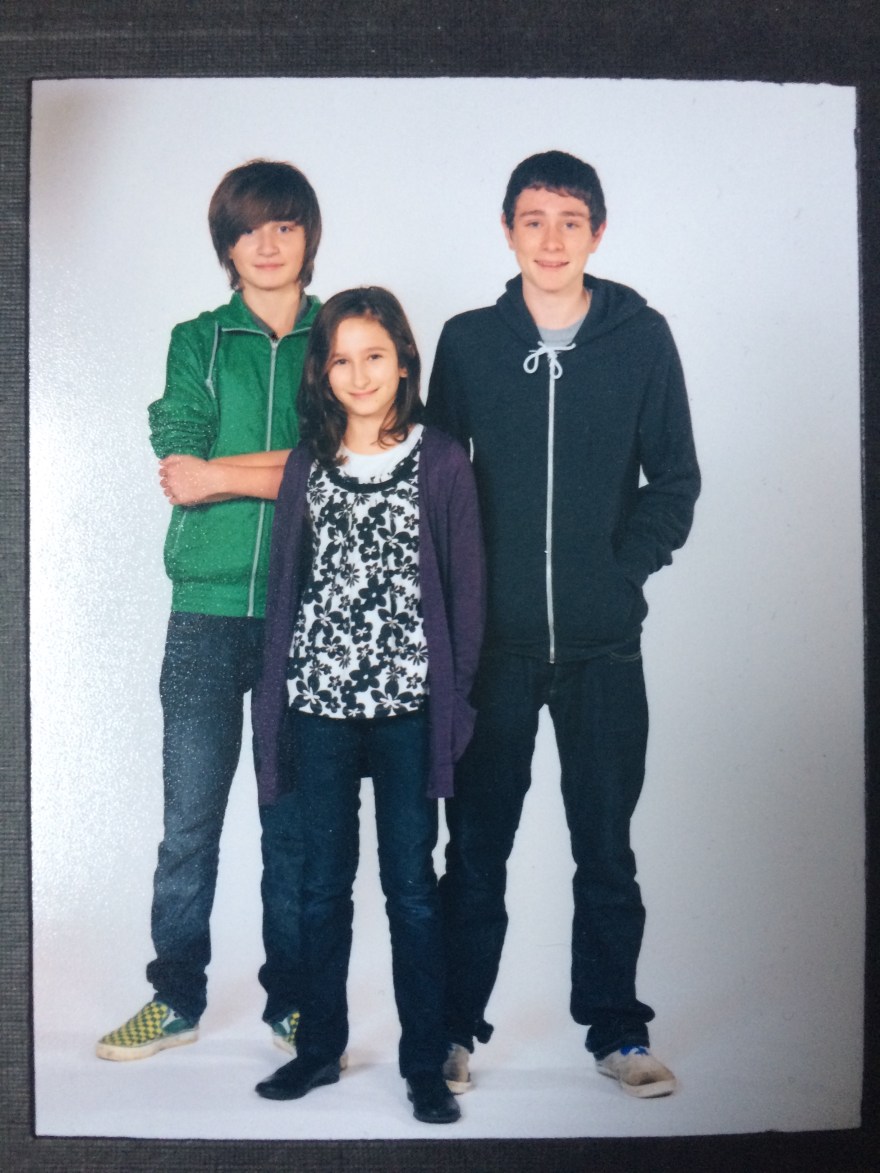
Jack, Myself, Rowan – 2008
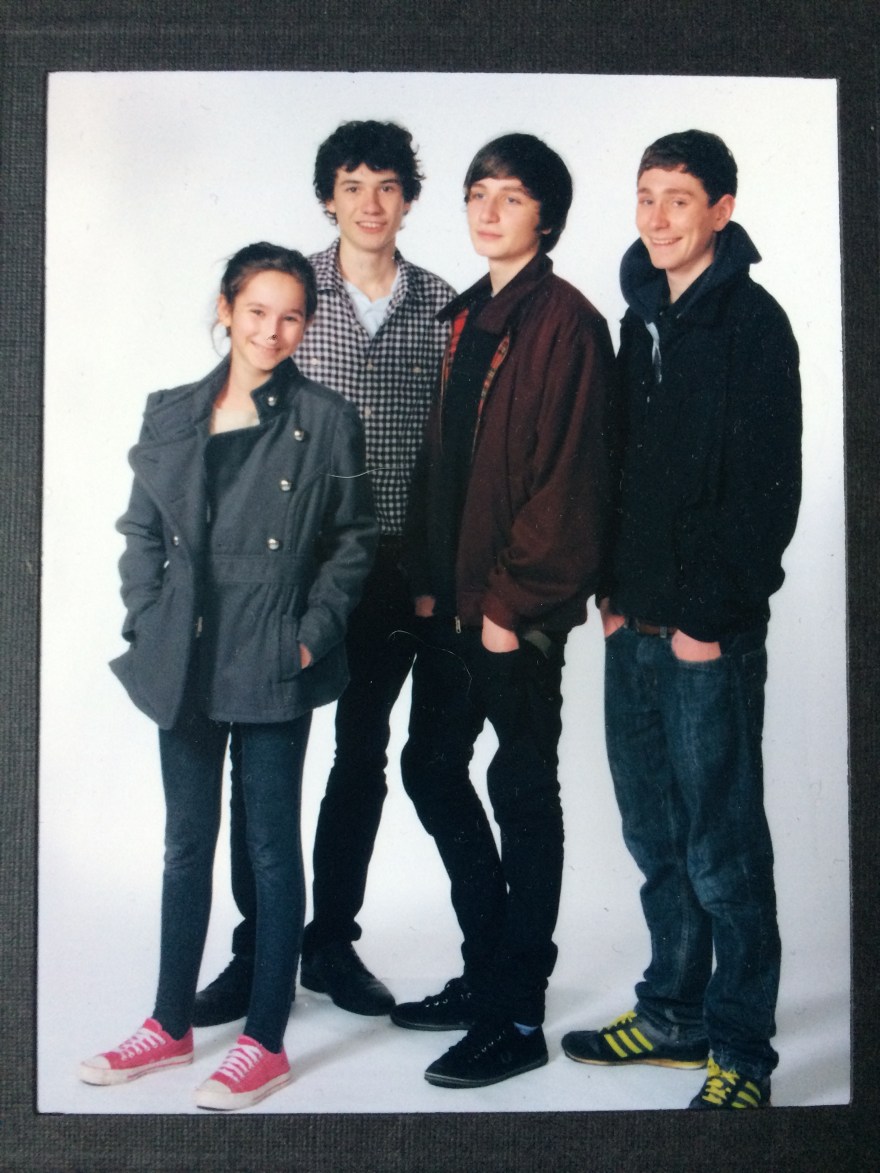
Myself, Alex, Jack, Rowan – 2010
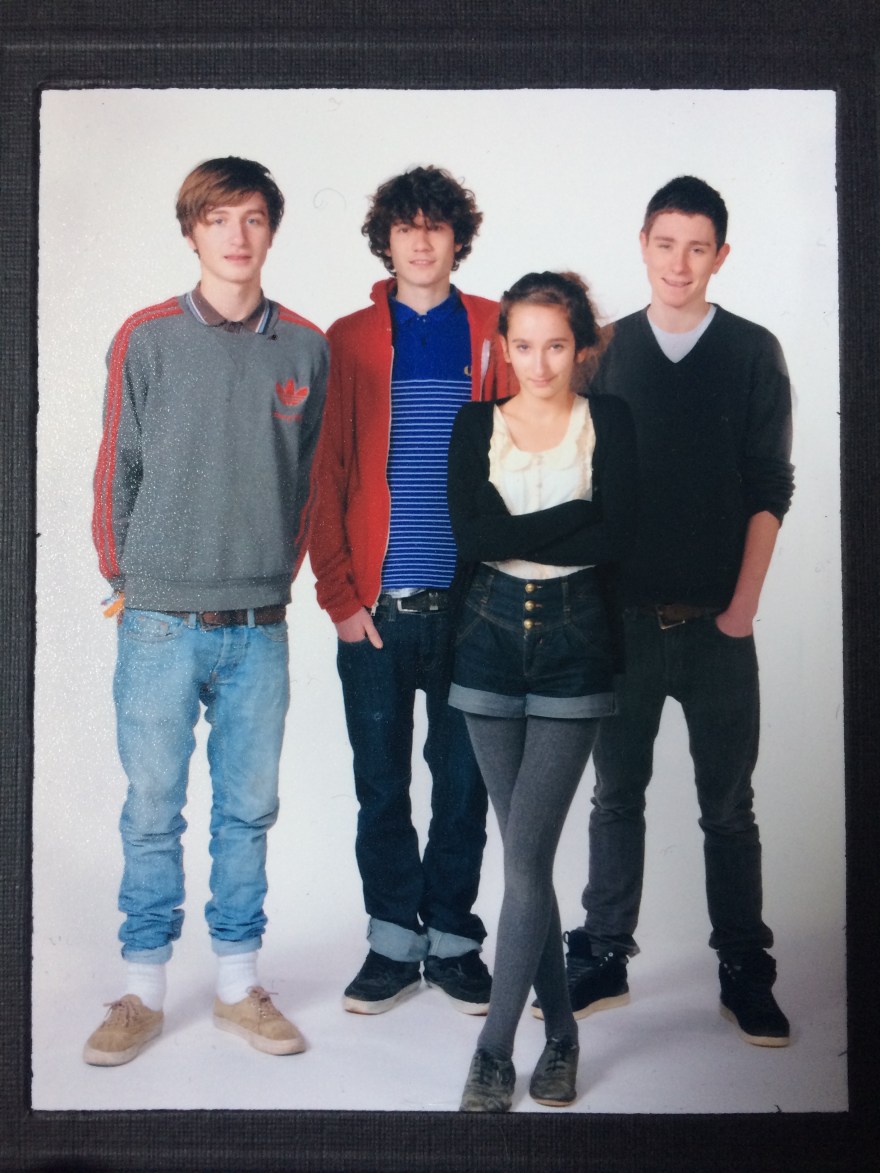
Jack, Alex, Myself, Rowan – 2011
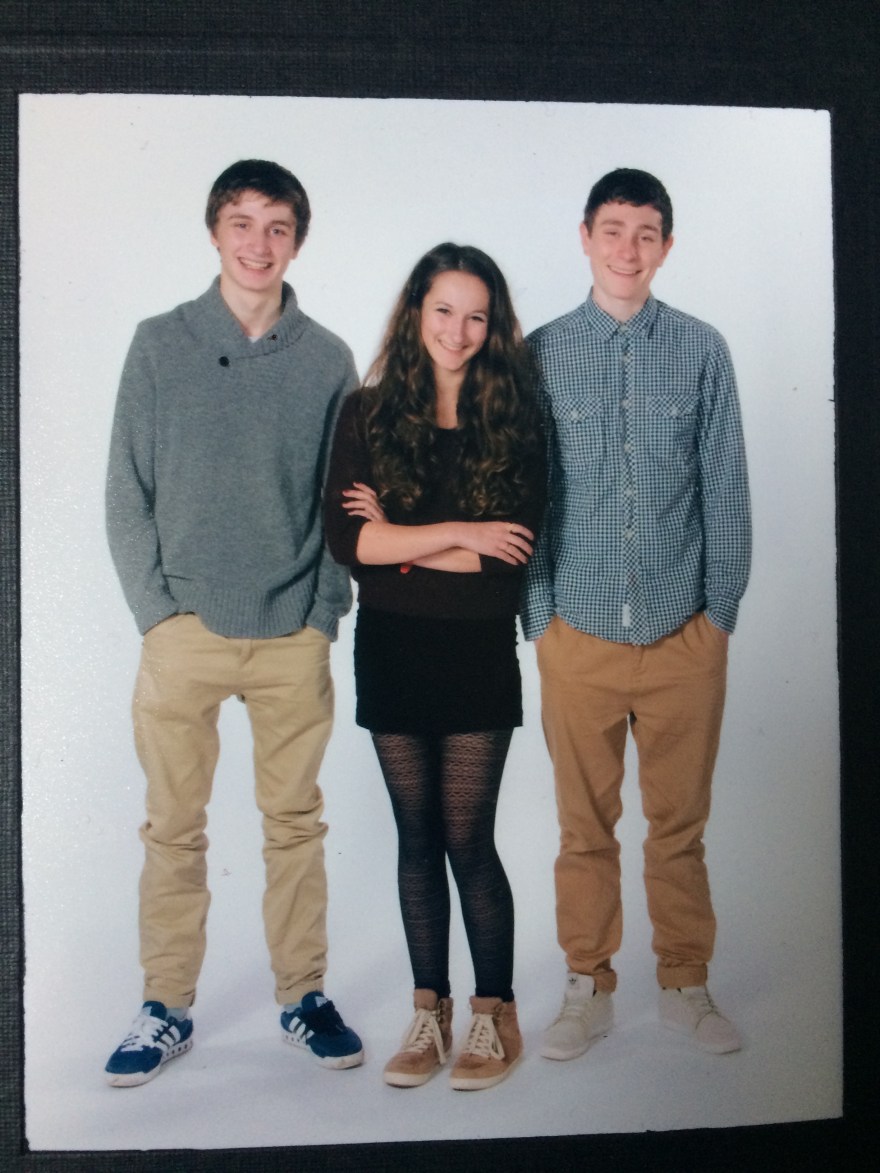
Jack, Myself, Rowan – 2012
In Sahika Erkonan’s Photography and the Construction of Family and Memory, Erkonan talks about the way in which families make photographs of themselves, and how the images are mostly made when the family is happy and smiling as this is the only type of family we would chose to document, however may not be a real representation of how people feel. He states that, ‘We are prone to enter a constructed visual family world’ implying that the images taken are forced and unnatural. My own family, in these portraits, are taken out of the home, and put in front of a plain white backdrop, taking away all context of our real lives, and making us two-dimensional, so that the viewer focuses on our smiles. While we may have been happy on this day or in this moment, that does not mean it is a full and accurate representation of the dynamic between us. The way in which we have no physical contact in the images, from 2007 to 2012, we either have our arms crossed or our hands in our pockets, gives a feeling of disconnect from each other, our bodies do not reflect our faces which emphasises the construction of the photographs.
Erkonan also talks about the way in which our emotions and experiences can change the way we look at family photographs. Having a strong emotional connection to a photograph or a personal involvement with an image or the events surrounding the image can change the way in which one will see the memory connected to that photograph. He talks about the ’emotional ties’ we have with images, the connections we make with feelings we had at the time. This was expressed by my oldest brother Rowan, as he saw the images when I was using them in this body of work, he stated that the images were funny as they were not showing what was happening in our lives at the times they were made. These emotional memories create a response in both myself and my brothers, and our memories of the photographs have become clouded by the events happening at the time. Perhaps our memories of how we felt emphasise our smiles as even more contradictory than they actually were. Moreover, Erkonan talks about how events after images are made can change their personal meaning. For example, he talks about deaths or divorce changing the way we see photographs, if somebody is no longer alive, a photograph of you standing with them appears to be a lie. Perhaps events from more recent years make myself and my brothers reflect differently on these portraits, making them feel even more as if they are not a true representation. Perhaps our relationship at the time was stronger than we remember, however due to the change of our relationship, good or bad, the photographs no longer feel like an accurate representation.
Memory is also subjective to the individual. Erkonan talks about the ‘collective’ memory, we all remember going to the studio and all having the same picture taken, however after the picture was made, we all had our own lives, our own experiences and events happening within our lives that may mean all of us have different feelings towards the photographs and therefore different emotional reactions. Each one of us could have felt something strongly at the time that would then change how they feel about the photographs. My feeling towards the portraits will differ from Rowans, and Rowans will differ from Jacks, our collective memory may be the same, but our emotional reaction will be completely different. This also emphasises the dynamic of siblings, we share the same parents and genetic information, however it is out differences that make up the majority of our relationship and our interactions with each other, and all the conflicts. This is also where the idea of empathy and understanding comes into play, while one of us may feel very differently towards a situation of a photograph, the other two may not understand, which could be applied to our personal lives. ‘Collective’ memory and individual memory is a huge dictator to how we feel when we look back on these photographs. Personally, I look at them, and I remember feeling separated from my brothers, having nothing in common and being a spectator in their lives, almost as if I was a supporting character in their story, and my own story was not relevant. I see my own smiling face as embarrassed, I was told to do so by my mum. I remember this being physically the closest I ever got to my brothers, even though we lived in the same house. I feel that I particularly feel this in the photographs with Alex, as they are pictures of three friends, three brothers, then me. They are emotive photographs for me, as I feel my loneliness, my separation and desire to be included or share my teen years with my brothers, but instead they shared them with each other and with Alex. I know, however, that it was not just like this, I know that there were difficulties more important than my loneliness going on between my brothers, which I’m sure would be their own individual memory when looking at these images, meaning their emotional reaction would be different to my own, and equally important.
 phoebebowdige.photo.blog