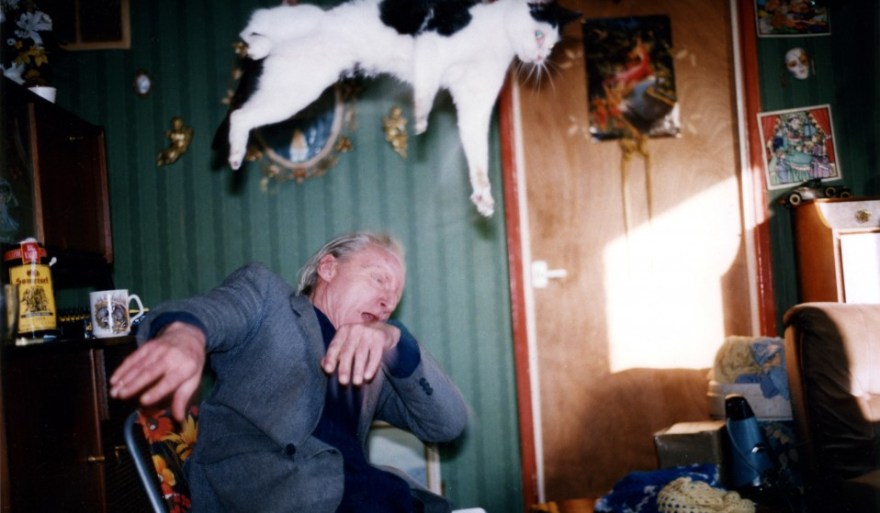
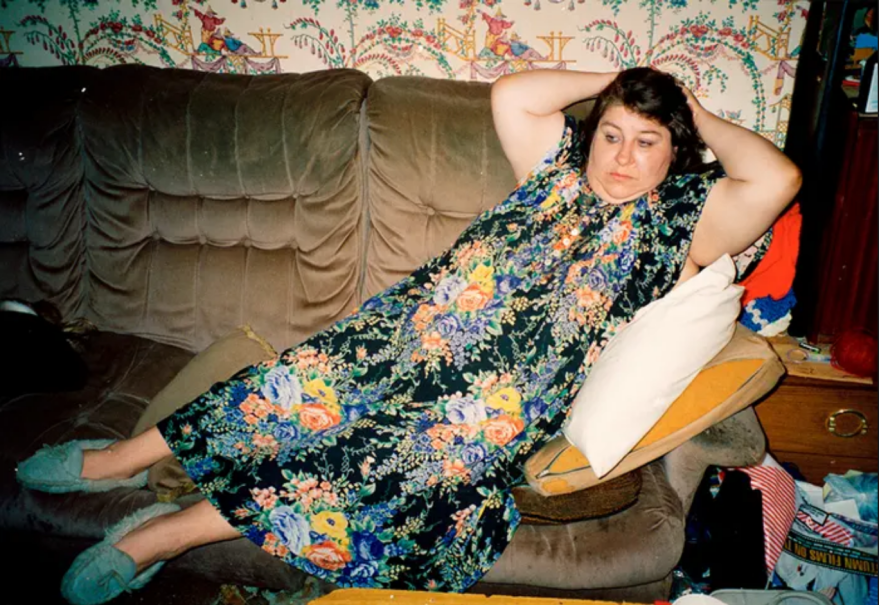
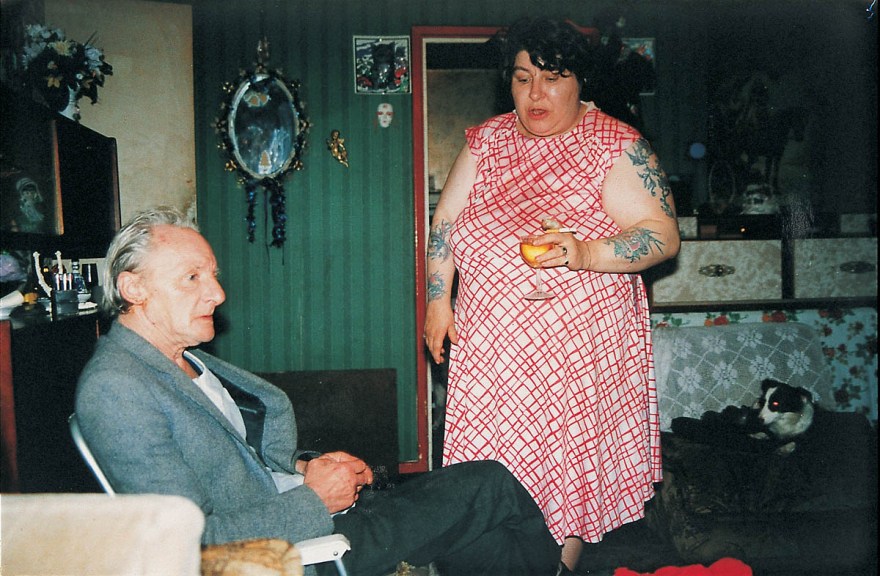
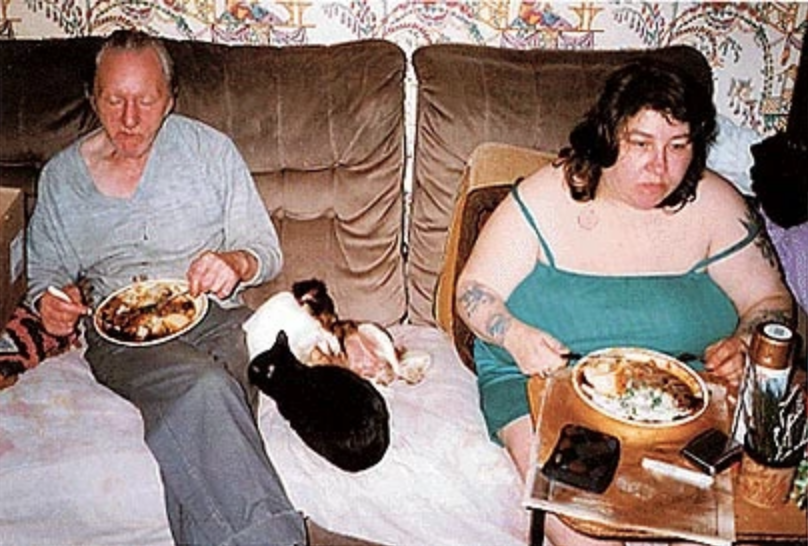
Richard Billingham’s images were made in Nottingham of his own family. They are a comment on social class and the reality of family, different from the posed portraits people were used to seeing the images show the gritty British realism that shows the true family. This work is a contradiction to the family image that has been built into peoples minds and the conventions of the representation of family life. Usually, people want to show their own families smiling, in perfect homes, with happy children and fun family activities, however this work shows the family in the complete opposite way. Billingham’s parents are shown in their own home, giving them the context of their own possessions and home environment, this makes the work very personal, differing from posed studio portraits where the family is taken out of a domestic context. This technique makes the images seem ‘truthful’ and ‘real’, appearing to show the events of daily life in the Billingham house hold, including aspects of family life that are never depicted in the conventional family portrait such as lounging around and eating.
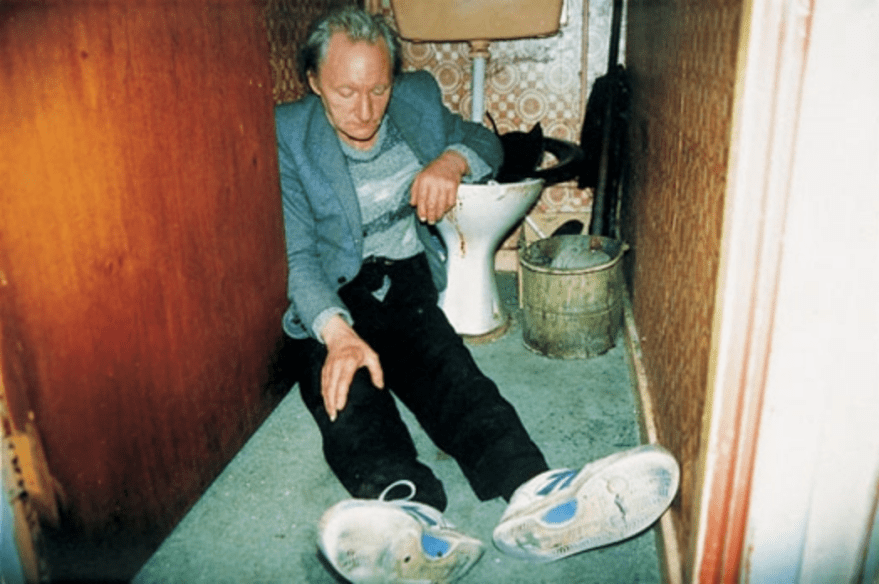
Billingham’s father, Ray, (depicted in the following photographs) was an alcoholic, and is shown in the last image sitting next to a toilet, perhaps pre or post vomit due to excessive drinking. This is something that would be very personal to the Billingham family, however Richard Billingham has decided to very publicly display this in the images, showing the shame, pain, and the effects of alcoholism on his father. This image must also be difficult for Richard Billingham to document, as it is the reality of his fathers addiction, however the way in which he shares this in the work shows the reality of not only family, but people, and not a forced smile portrait in a cold studio.
In an article for The Guardian by Tim Adams, Billingham comments on his time making this work of his parents. He states that the work was very much about his father and his drinking problem. He talks about the difficulty he had with his father, and some of the events that influenced his drinking, “Liz [Billingham’s mother] had moved out a year earlier. Ray never left his bedroom, except to go to the toilet. He would spend all day looking out of the window or listening to the radio. And drinking.” This shows how person the work was to Billingham, he used the camera to document his father and the way in which he lived without forcing any kind of behaviour.
This type of family portrait photography differs greatly from that of my own found images. While we did make more candid photographs when we were children, we only ever documented happy moments with smiling faces, typically ‘the Kodak moment’. Where as Billingham has shown the darker moments,moments of pain and struggle that would never usually been documented. As a viewer, I almost feel as though this is intrusive and I am seeing things within a family that I shouldn’t see, however this feeling would be down to the conventions of what we see of family life, and therefore, makes the work even more interesting.
 phoebebowdige.photo.blog